
A healthy tree enhances beauty, provides shade and adds true value to your property. When a tree begins to decline, it doesn’t announce it. It slowly but surely turns from being a favorite backyard amenity to a dangerous threat, just one storm away from destroying your home, your family, your car, and all around it.
But so how does a tree die? Rarely overnight. Rather, they utter warnings for months, even years, before a loose branch snaps down or a whole tree collapses out of nowhere.
But that’s really good news. Well, it means that you have time to act, if you know what you’re looking for. Once known, most of the signs of danger are not too difficult to see. In this guide, you will learn the top 10 signs that a tree is dying, what each sign signifies, and the savvy steps you can take to safeguard your property before it’s too late.
Quick Answer: The Fastest Way to Check If a Tree Is Dying
For a quick test, use the scratch test. Gently scrape a small area of bark on a twig or branch with a knife or fingernail. If the underlying layer is green and moist, then the portion of the tree is alive. If it is brown, dry and brittle, that part is dead. Scratch a few branches in various locations; if all of the scratches show brown, it could be dead or dying. Let’s dive into the details below.
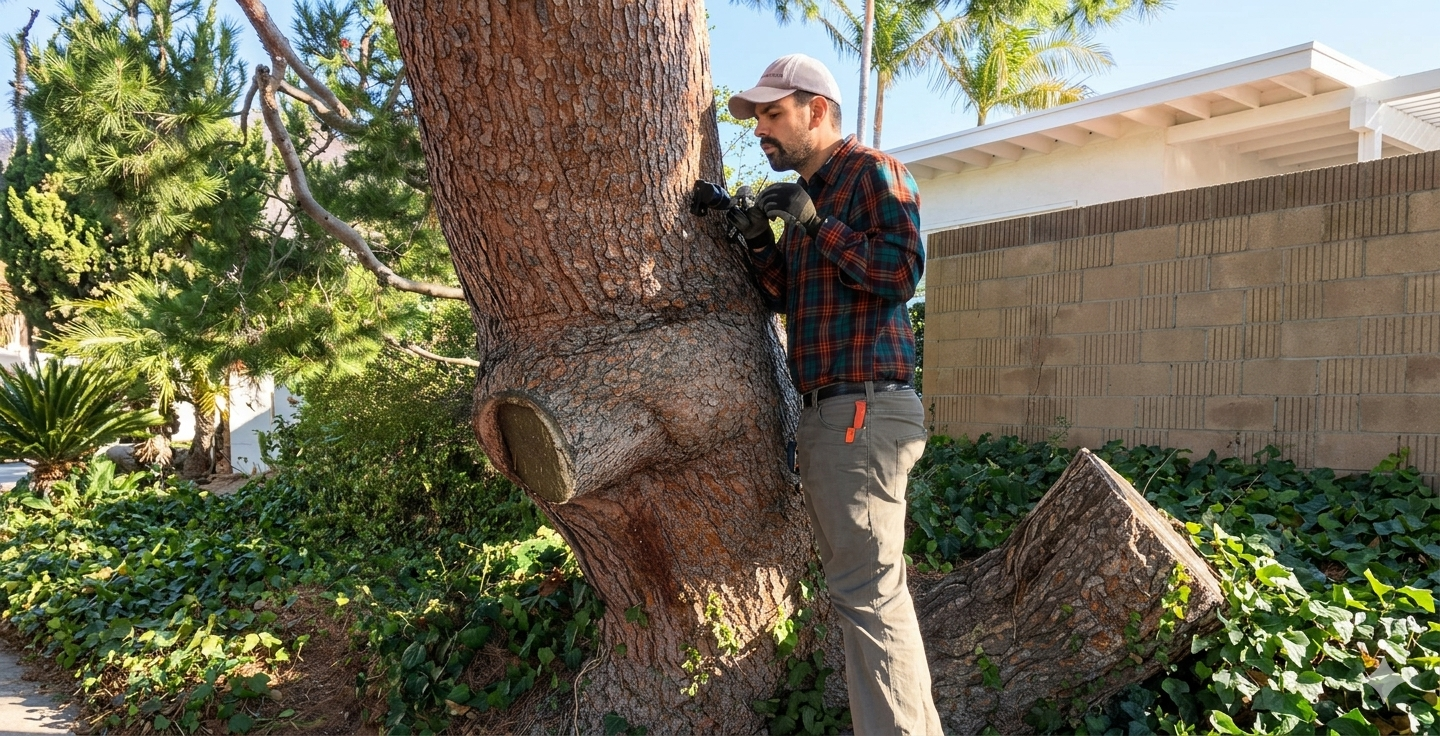
1. No Leaves During Growing Season (or Sparse, Discolored Foliage)
The simplest symptom of a tree that is having trouble is little or no healthy foliage on a tree that should be full and green. A healthy deciduous tree should be leafy in the spring and summer. When large areas remain uncovered, or leaves are smaller, yellow, brown or spotted, but other trees are healthy and vigorous, it’s a sign that something is wrong with your tree.
Keep an eye on the timing, as well. If the leaves drop significantly earlier than usual in the fall or if the tree doesn’t bud out in spring at all, it is a sign of serious decline.
2. Brittle, Peeling, or Missing Bark
Bark is the skin of trees and the condition of the bark gives a lot of insight into the health of the tree. A healthy tree will have tight bark that will re-grow on its own. You can see cracks, peeling large chunks of bark, or falling bark on a dying tree, which reveals smooth bare wood beneath.
Vertical cracks, deep splits and spots where the bark will not regrow are warning signs. If bark is lost, the tree is vulnerable to pests, disease and water loss, so it begins to die rapidly.
3. Dead, Bare, or Brittle Branches
Widespread deadwood is a warning sign although a few dead branches here and there are normal. Examine canopy for bare limbs, easy snapping and limbs that do not leaf out. When you see multiple large dead limbs or if the whole crown is thin and patchy, the health of the tree is on the decline.
The presence of dead branches is also a safety hazard. These can drop suddenly in wind or storms and should be taken care of even if the rest of the tree has been killed.
4. A Leaning Trunk
Not all leaning trees are doomed to die, but if a lean is new or worsening, it’s a warning sign. Trees that have a natural growth angle over many years are normally stable. A tree that is starting to show signs of leaning, particularly following a storm, or a tree that has some soil heaving up around the base on one side may have a root system problem.
If the lean is greater than approximately 15 degrees from the vertical, it is likely that the tree is unstable or has damaged roots and may have a risk of falling. This is one of the most pressing indications to get checked by a professional.
5. Fungus, Mushrooms, or Conks Growing on the Tree
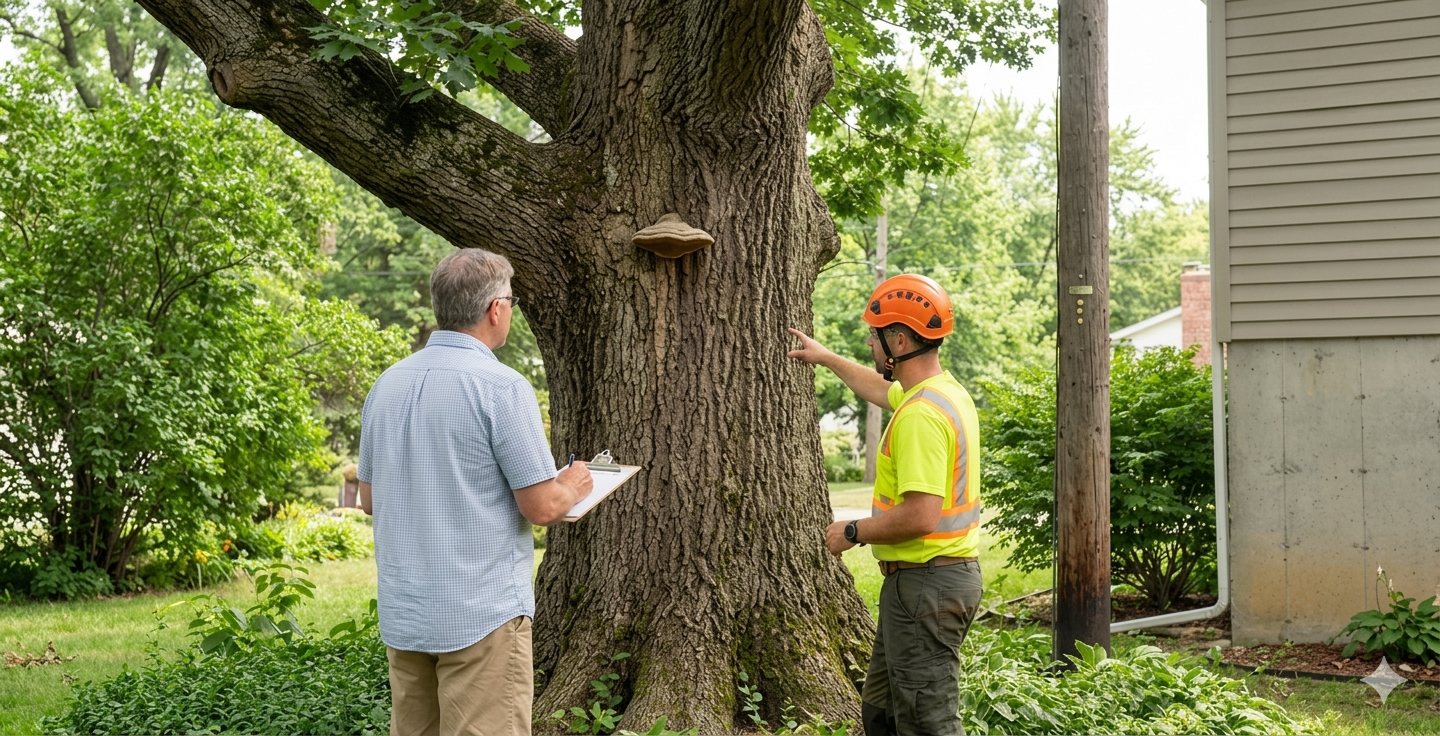
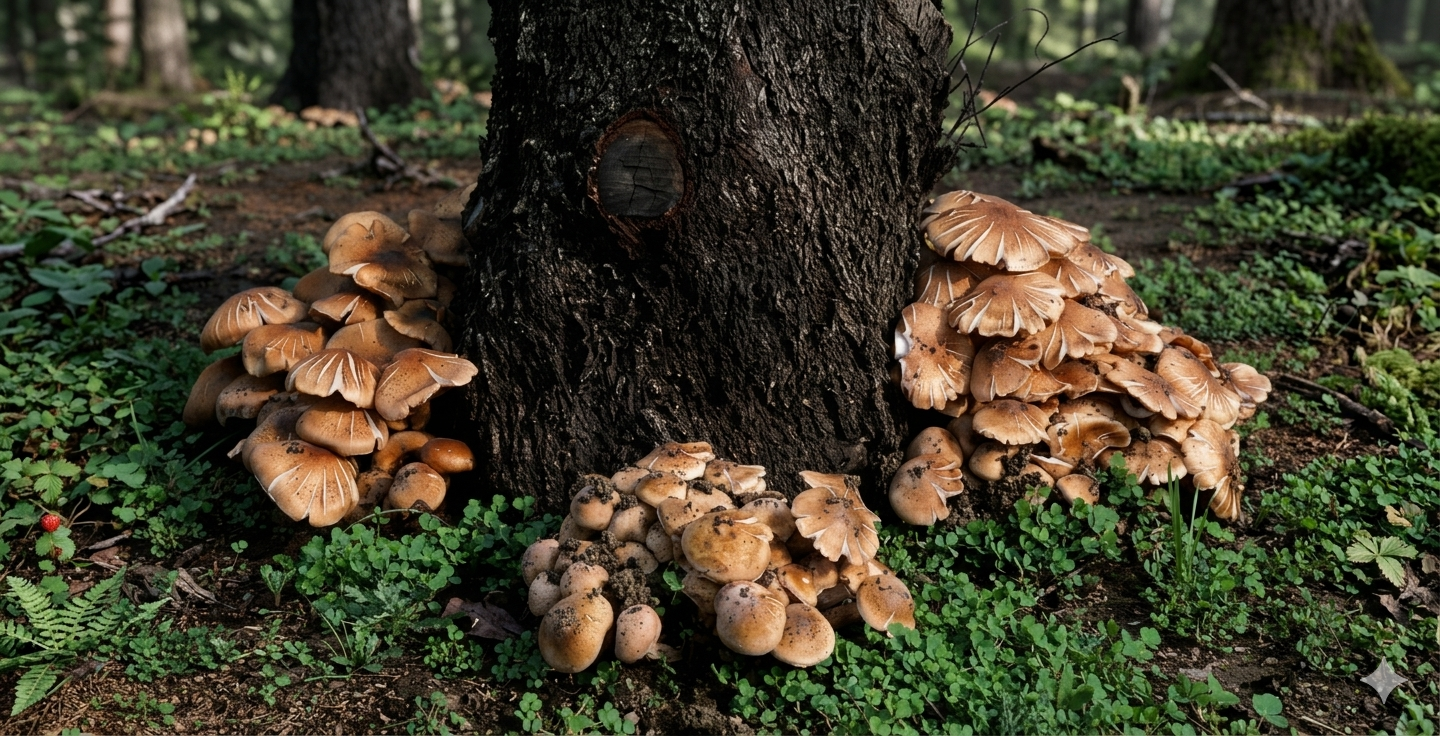
One of the most obvious signs of decay is the growth of fungus. Typically, mushrooms, shelf-like conks, or bracket fungus growing out of the trunk, at the base or across the roots, will indicate that the wood inside is rotting.
Fungi are feeding on dead and decaying organic material which often results in advanced damage and hidden in the trunk or root system. Apparent external health of the tree does not necessarily mean that it is structurally strong or solid.
6. Cracks, Cavities, and Hollow Spots in the Trunk
The trunk supports the whole tree and any weakness in the trunk is dangerous. Slide your fingers (gently!) and your eyes down the trunk of the tree and note any deep vertical fissures, open wounds, seams or hollow cavities.
A hollow trunk does not necessarily indicate tree death, as some trees can survive with some internal decay, but does suggest that stress may cause tree failure. Large cavities, soft or crumbling wood and cracks that extend deep into the trunk should all be professionally assessed.
7. Signs of Pest Infestation
Dying trees and trees that are already stressed are frequently infested by insects and boring pests that hasten the process of tree death. Be alert for tiny holes in the bark, sawdust-like material (frass) at the base, tunnelling patterns under loose bark or increased woodpecker activity, because woodpeckers feed on the insects that are present in weakened wood.
Major culprits include bark beetles, borers and carpenter ants. If the tree is exhibiting heavy infestation with any of the symptoms listed it is probably in trouble.
8. Root Damage or Root Rot
The roots hold the tree in place and provide water and nutrients, but root issues are difficult to detect since they are underground. Watch for symptoms above ground – soft or spongy soil around the base, fungus covering root zone, small leaves or off colour leaves and heaving or lifting of the trunk.
Root damage is caused during construction, soil compaction, digging or over-watering. Root rot can be especially deadly as it compromises the entire tree and can cause a tree to collapse suddenly, even if it still shows some green leaves on the canopy.
9. Excessive Sprouts at the Base (Epicormic Shoots)
Sometimes a tree heavily under stress may exhibit epicormic growth or suckers, which are a collection of little shoots along its trunk or at the base. Although this may appear to be new growth, it is often a warning sign, the tree’s final effort to photosynthesize as the main canopy is dying.
Trees with this type of small trunk growth, particularly when combined with a declining crown, are usually on the verge of death.
10. The Trunk Fails the Scratch Test
We mentioned the scratch test earlier as a quick check, and it’s worth doing thoroughly. Roughly remove patches of bark on several twigs and branches around the tree, down on the trunk (if practicable).
If it’s green and damp under the bark, it is still alive. If it is brown, dry and brittle, then that is a dead section. When branch after branch shows no sign of green and the above symptoms are beginning to add up then the tree is probably dead or dying.
What Should You Do If You Spot These Signs?
If your tree is exhibiting some of these symptoms, it does not necessarily condemn the tree. Proper care, pruning, pest treatment and soil management can save many trees, particularly if problems are detected early. The secret lies in the ability to determine whether a tree can be salvaged or whether a tree has become dangerous.
Here’s a simple approach:
- One or two mild signs: Monitor the tree closely, improve watering and soil conditions, and consider a professional assessment.
- Several signs together: Have a certified arborist inspect the tree to determine whether it can be treated or should be removed.
- Urgent hazards (leaning trunk, large dead limbs over your home, hollow trunk near structures): Call a professional right away, since these trees can fail suddenly.
A trained arborist can evaluate what you can’t see, including internal decay and root health, and give you an honest recommendation instead of guesswork.
Protect Your Property Before It’s Too Late
A tree that’s dying isn’t likely to heal on its own, and the longer you wait, the more it can pose a hazard to your house, your family and your finances. Recognizing these signs early in a tree’s life will help you have the best opportunity to either save a tree of great value to yourself or safely remove a tree of great hazard.
When you see any of the symptoms listed above, don’t take any chances. If you have any questions about tree care, please contact Owens Trees today for a professional tree inspection. We have a highly trained staff that will evaluate the health of your tree, discuss your choices clearly and ensure the safety and beauty of your property. Call Owens Trees today to schedule your consultation.